Company Profile
 GLOBAL


 Request Info
What is Lightning Surge?
When electric charges are built up in thunderclouds to such level that could break atmospheric insulation, an electric discharge eventually occurs between these clouds or between the clouds and the ground. Electric current reaches 20-150 kA.
An abnormally high voltage generated by direct lightning discharge applied to electric power cables or communication cables at that instance is called ʻdirect lightning surgeʼ.
Correspondingly, such voltage induced by electrostatic or electromagnetic induction on those cables located close to the point where a direct lightning hits, is called ʻinduced lightning surgeʼ.
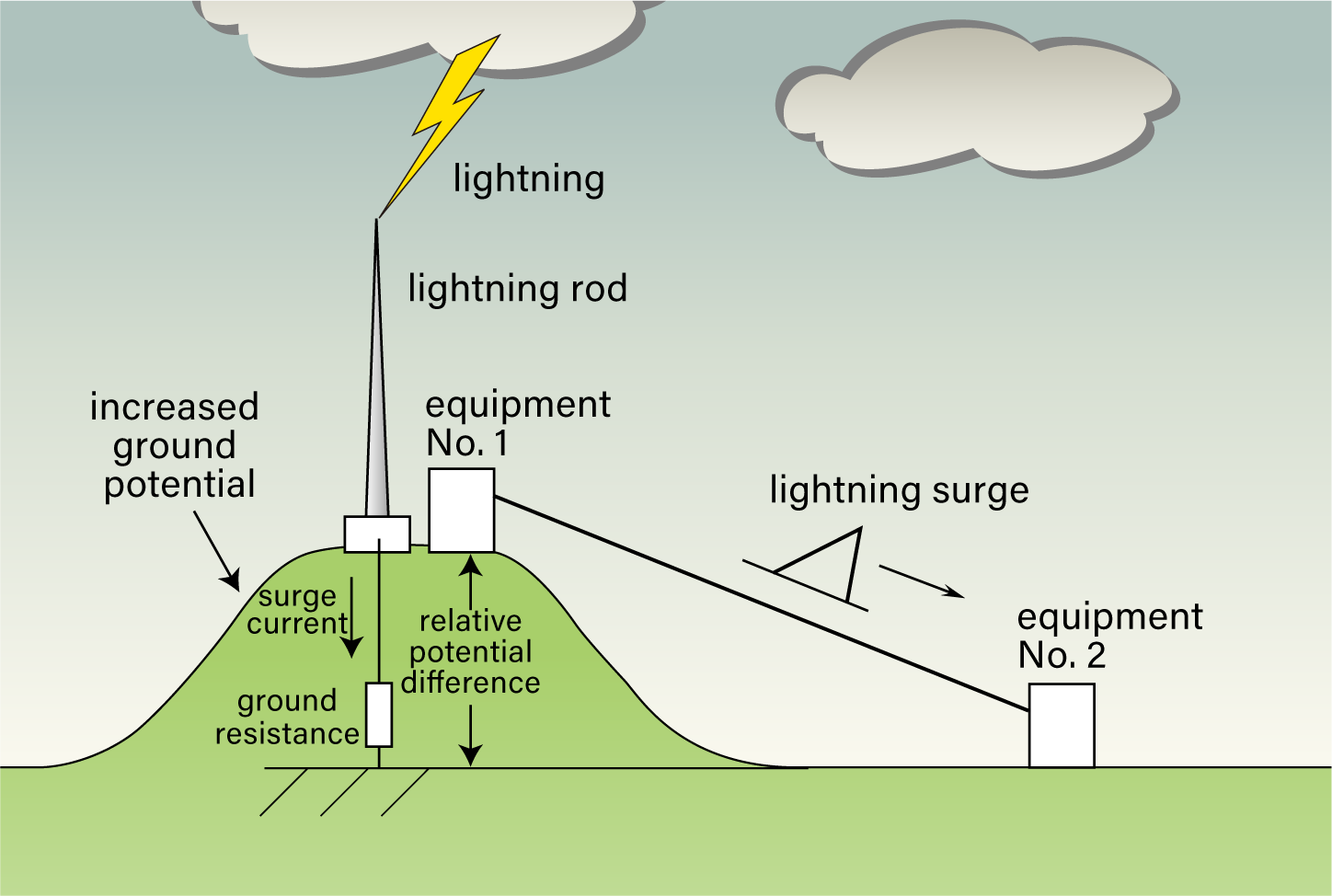
Also, when lightning strikes a lightning rod and the ground potential rises, instrumentsʼ grounding potential becomes also high. This causes an abnormally great potential difference between the cables and the ground, which is called ʻlightning surge caused by increased ground potentialʼ.
Direct lightning surge energy is enormous. A surge protector alone cannot protect the instruments. It is necessary to share the job by lightning rods and overhead grounding wires to absorb most of the energy, and by surge protectors to absorb only the rest of the energy.
Here, we explain the mechanism how lightning surges occur, except for the direct lightning surge.
Electrostatic induction
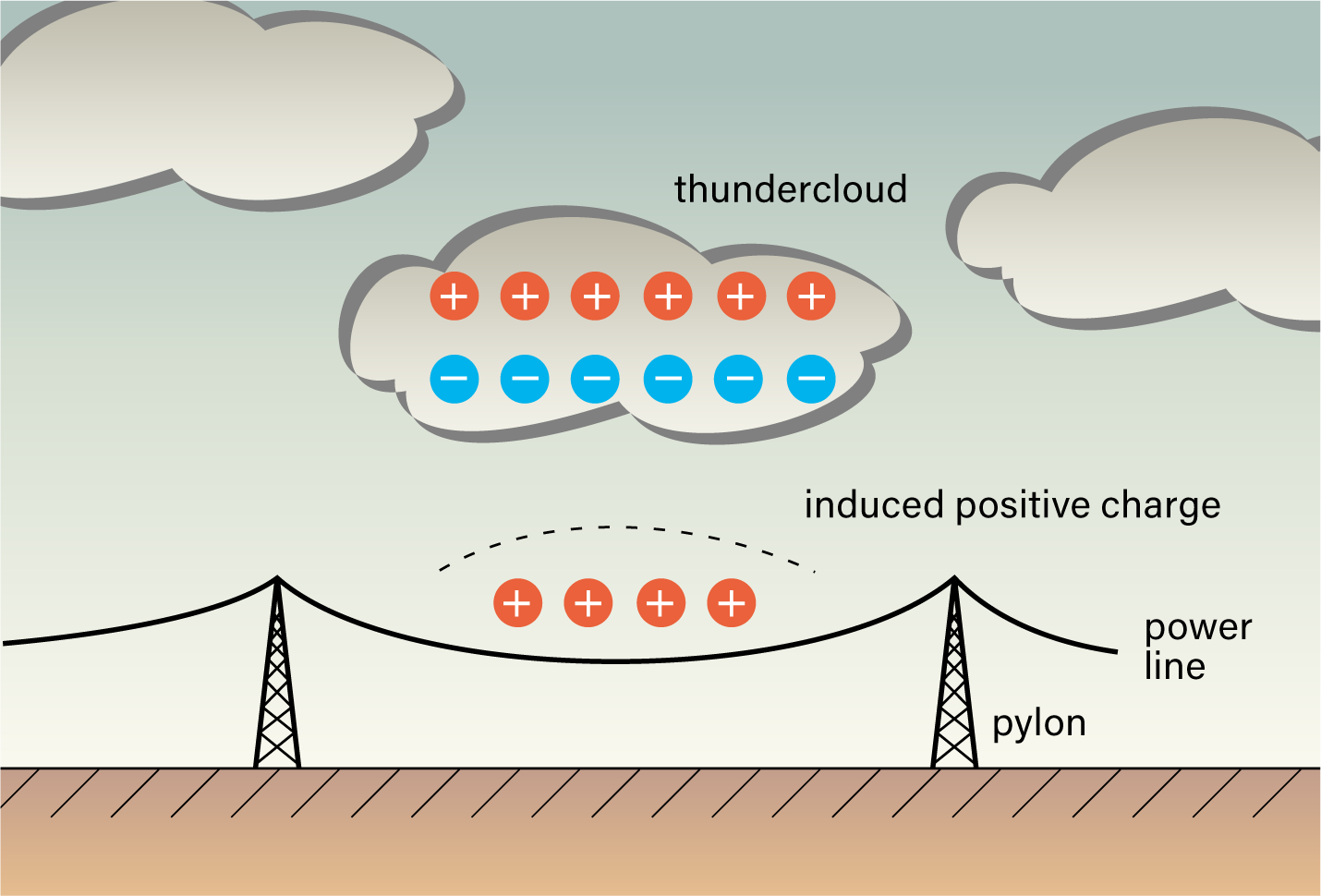
When thunderclouds located above a power cable or communication cable contain negative charges at their bottom parts, high level positive charges are induced electrostatically within the cable and high voltage is developed by electrostatic induction from thunderclouds (Figure 1-1).
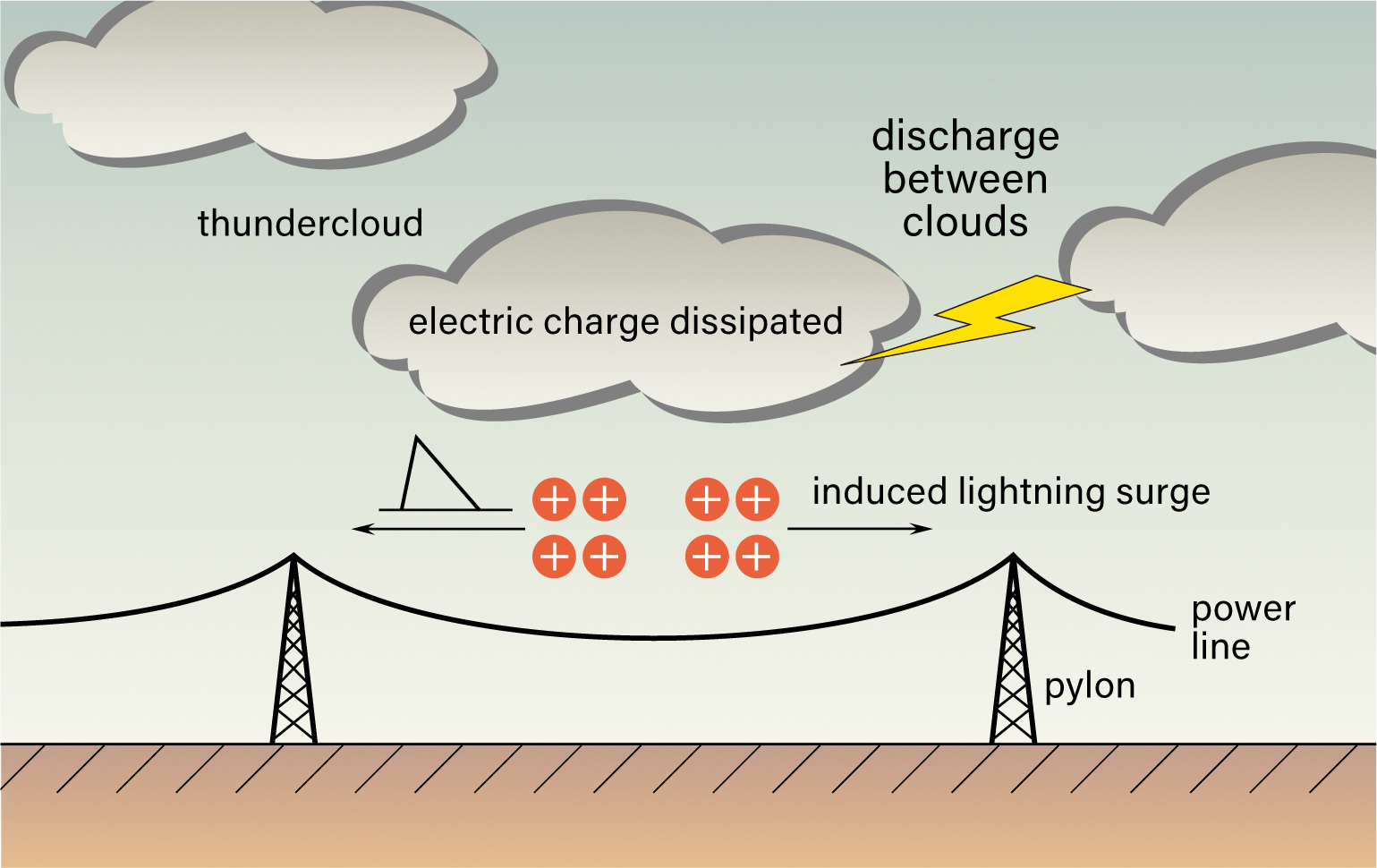
At that instance, the negative charge at the bottom of the thundercloud disappears by discharging between the clouds or between the clouds and the ground. Then, the positive charge which is trapped by the cable are freed and led to both directions on the cable as a surge voltage (Figure 1-2).
Electromagnetic induction
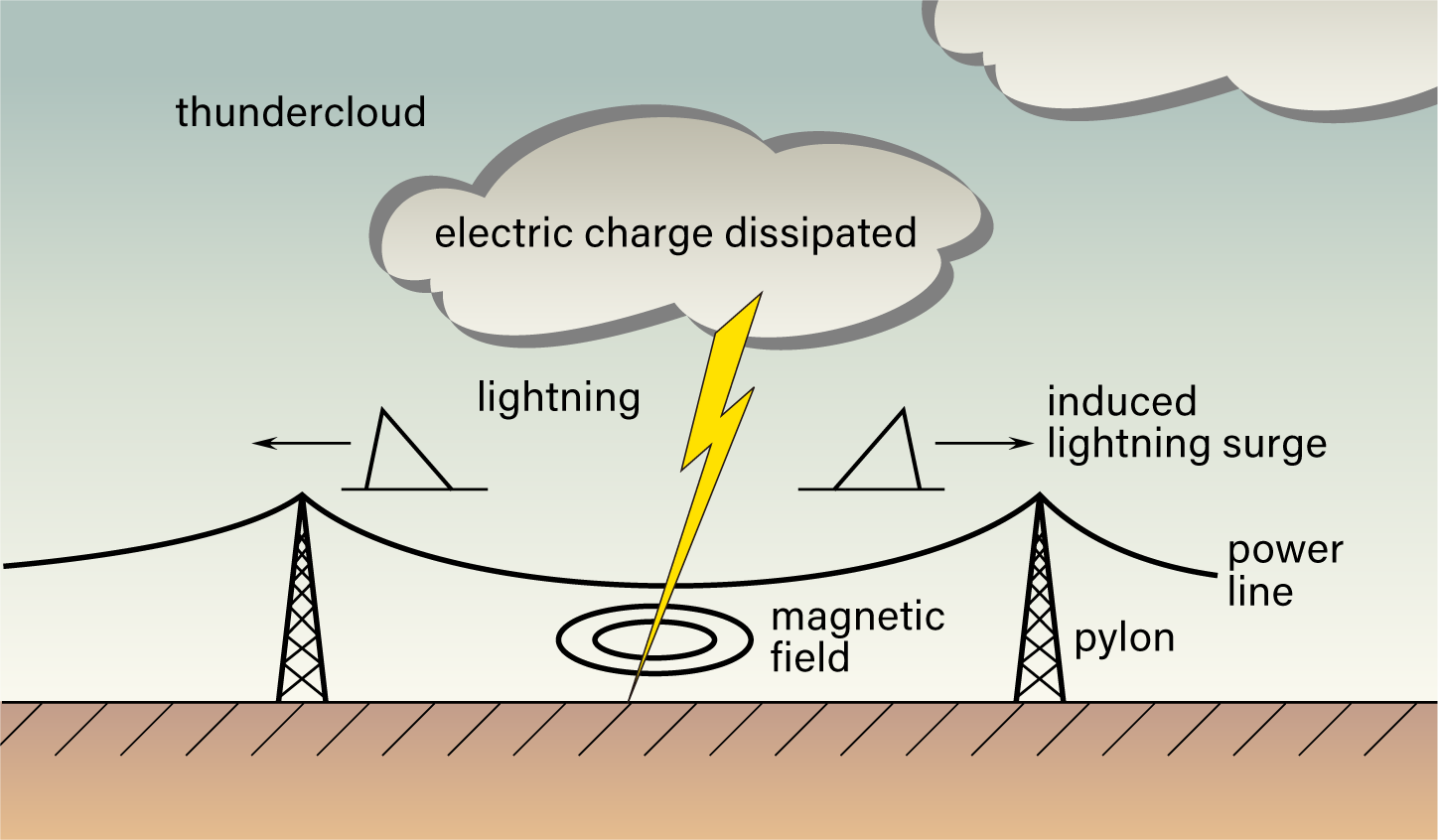
A discharge between the clouds and the ground occurring near from a power cable or communication cable generates a magnetic field due to its surge current. When the magnetic waves propagated within the field reach the cable, a lightning surge is induced (Figure 2).
Increased ground potential
When lightning strikes a building or a lightning rod, high current flows to the ground and the ground potential rises. This causes a potential difference between the equipment No. 1 located close to the lightning rod (high potential) and the equipment No. 2 located far away from it (low potential), and as a result the lightning surge is directed from the ground to the cable between these locations (Figure 3-1).
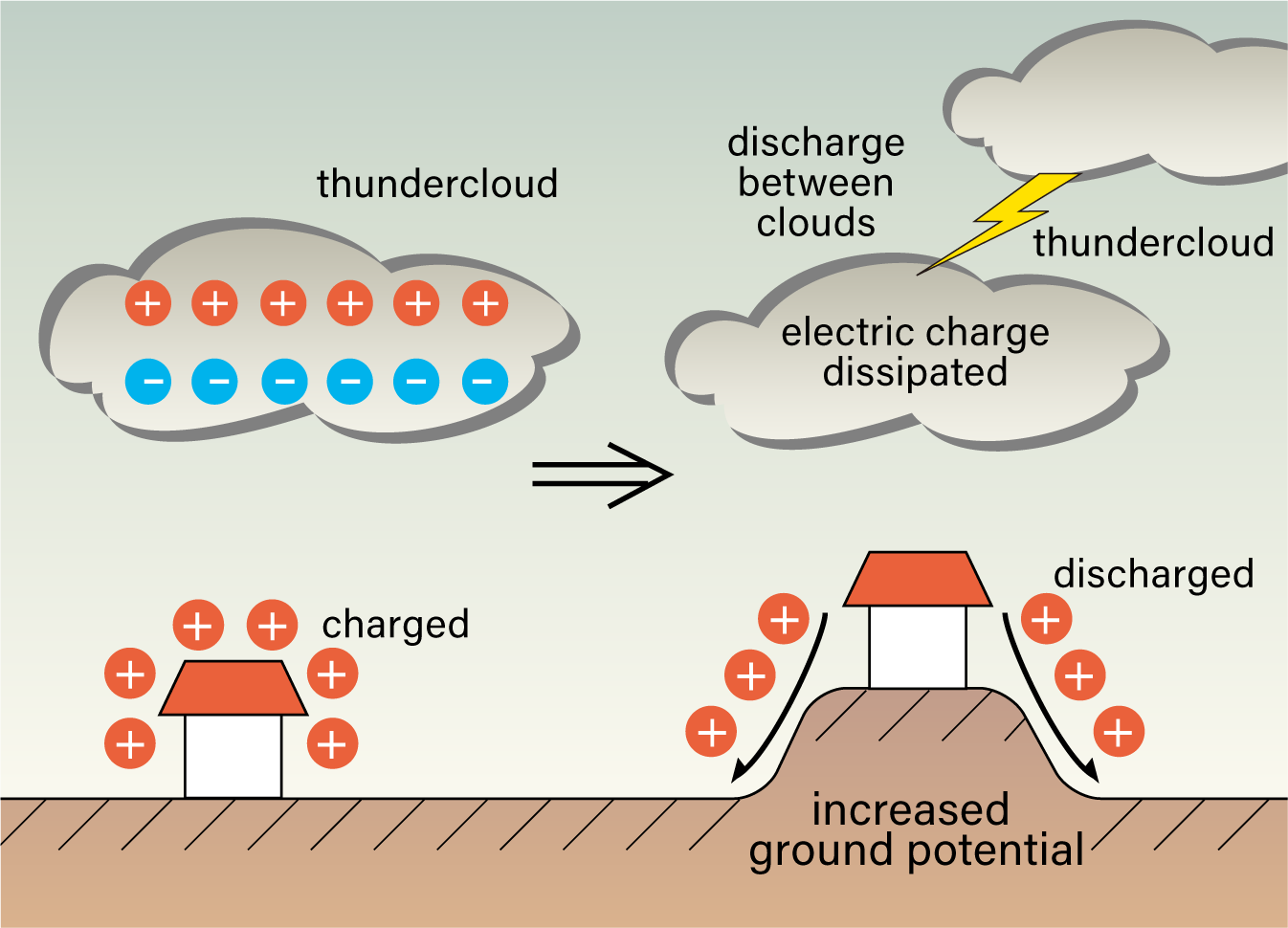
In addition, if a building is in charged state by thunderstormʼs electrostatic induction, an atmospheric discharge dissipating the electric charge at the bottom of the cloud causes the electric charge on the building to flow toward the ground. This also leads the ground potential to rise and the lightning surge directed to the cable from the ground (Figure 3-2).