


 Company Profile
 GLOBAL


 Request Info
Surge Protector Selection
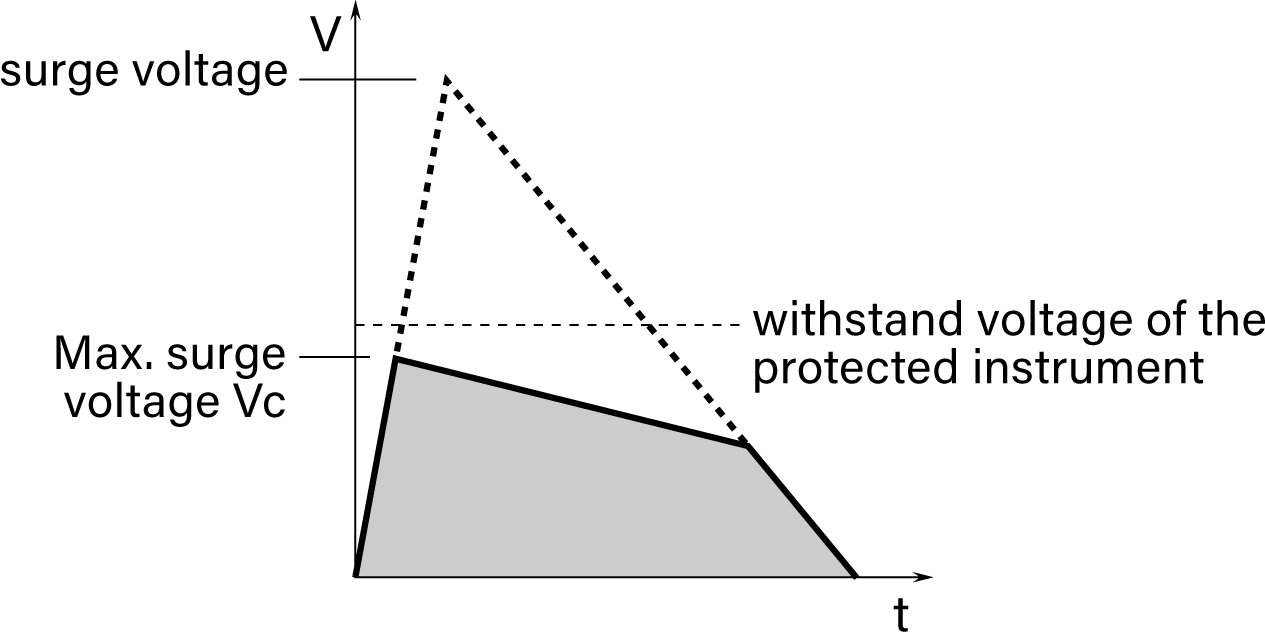
Maximum surge voltage (clamping voltage)
The maximum surge voltage of the surge protector must be lower than withstand voltage of the protected instrument (Figure 1).
Maximum load current
Choose an appropriate model considering how much current, in mA, you need it flow for a signal line or how much power, in VA, you need for a power line.
Discharge current capacity
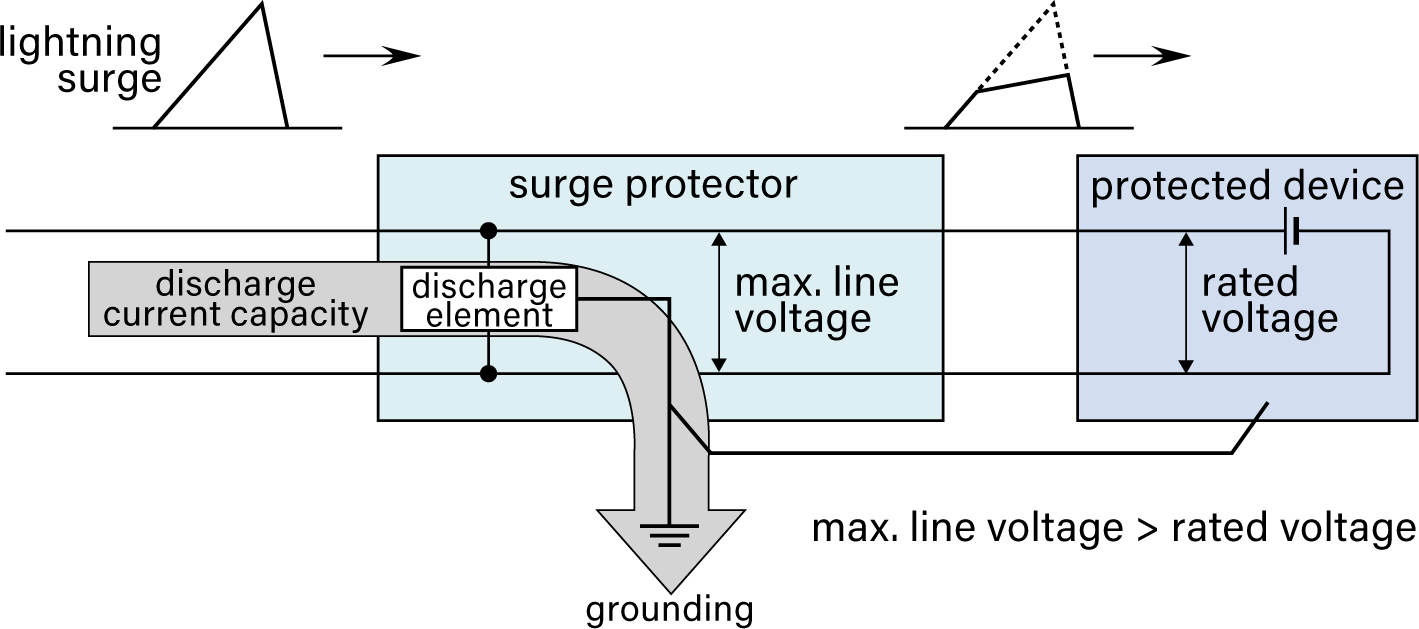
Our surge protectors have different ratings from 1 kA to 20 kA. Choose an appropriate rating considering how often lightning strikes your installation and how important is to protect the instrument (Figure 2).
Maximum line voltage
The maximum line voltage must be higher than the rated voltage of protected instrument (Figure 2).
Which surge protector do you choose?
Surge protectors for signal line
Our surge protectors are classified according to sensor/signal types, such as standard 4-20 mA signal, RTD, thermocouple, potentiometer, strain gauge and pulse generating device. We also have those specific for various field networks such as RS-485, Ethernet, PROFIBUS and DeviceNet.
[Example]
A 2-wire transmitter in general transmits 4 to 20mA DC output signal, powered by 24V DC power source on the same loop.
Choose the lightning surge protector for standard signal (ex. MDP-24-1). Both transmitter and control room instrument incorporate electric circuits. Therefore, surge protectors are needed at the both side.
In case of RTD, choose the lightning surge protector for RTD use (ex. MDP-RB). Even though the sensor has no electric circuit, a surge protector should be connected at the detection side in order to prevent the platinum resistance probe from breaking, in addition to the transmitter side.
Surge protectors for power line
Maximum load current up to 200 A is selectable. Single-phase/two-wire, single-phase/three-wire, three-phase/three-wire and DC power supply systems are selectable. Choose one based on the load current and the number of phase.